
ENGLISH VERSION BELOW
Commetteresti un’azione illegale se sapessi, con assoluta certezza, di non doverne mai rispondere?
Per quasi tutti quelli che stanno leggendo questa domanda si tratta di un esercizio teorico. Viviamo dentro un’aspettativa imperfetta, ma reale, secondo cui violare la legge comporta conseguenze per chi lo fa. È una delle strutture invisibili che tengono insieme qualsiasi società funzionante.
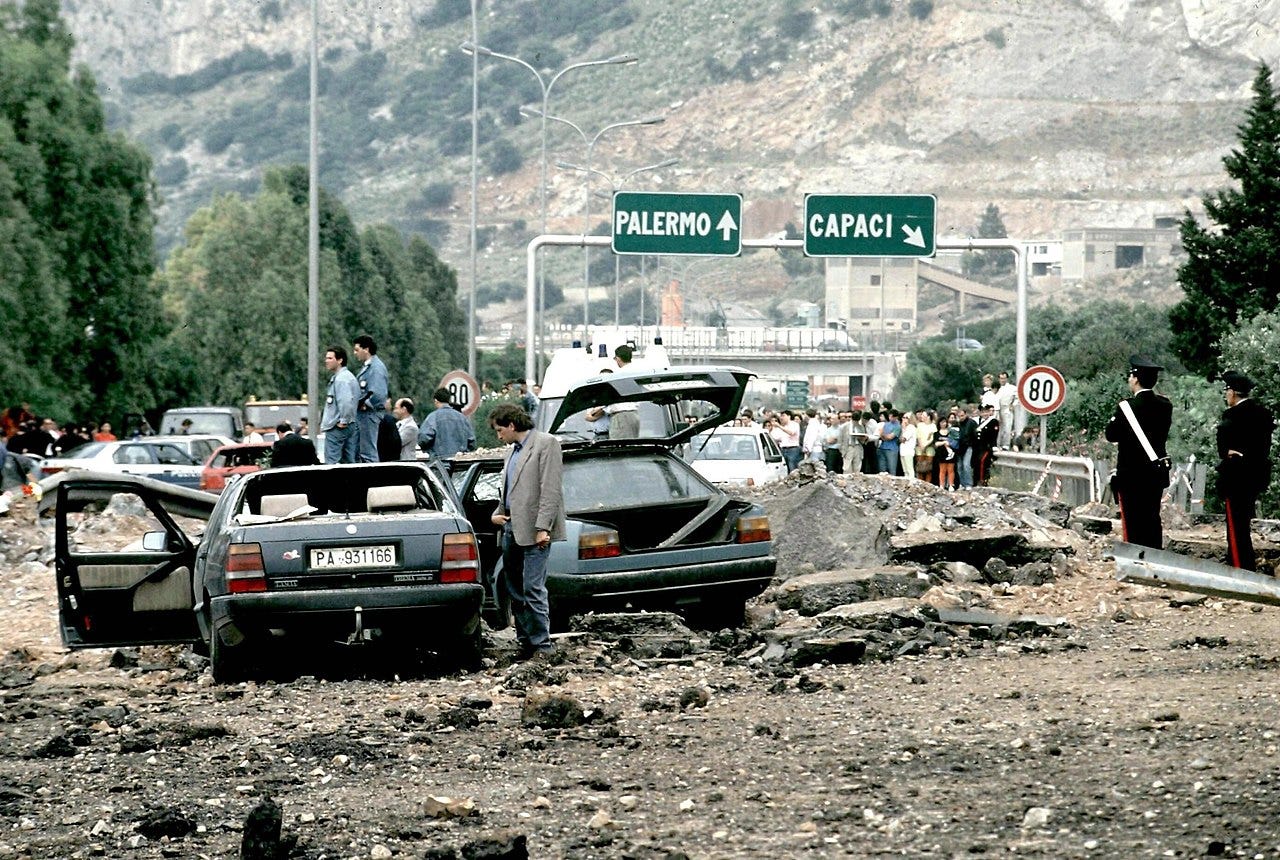
Ma non è così per tutti. Per alcuni attori, come certe organizzazioni criminali e un gruppo ancora più ristretto, ma molto più influente, di Stati, il comportamento si fonda sull’assunto dell’impunità. E quando si comincia a osservare più da vicino questa dinamica, ci si accorge che gran parte delle forme più estreme di violenza nel mondo dipende proprio da questa convinzione: la certezza di poter agire senza mai doverne pagare il prezzo.
In questa serie di tre articoli cercheremo di capire come nasce l’impunità, come si consolida e che cosa servirebbe davvero per smantellarla.
Per iniziare, guardiamo al crimine organizzato che, nella sua definizione più semplice, può essere descritto come la ricerca di un vantaggio, quasi sempre materiale, attraverso mezzi illegali e spesso violenti, sostenuta dalla ragionevole aspettativa di restare impuniti. Se al posto del vantaggio materiale sostituiamo il potere politico, la definizione cambia molto poco. Un’organizzazione criminale e uno Stato che agiscono sapendo di non dover affrontare conseguenze condividono una caratteristica strutturale. Non la convinzione di avere ragione, ma la certezza di non pagare.
Questo non significa che uno Stato sia una mafia o che un capo di governo sia un gangster. Un’organizzazione criminale transnazionale e uno Stato sovrano hanno ben poco in comune per dimensioni, funzioni, fonti di legittimazione o strumenti di cui dispongono.
Eppure, in circostanze precise, la certezza dell’impunità apre a entrambi la strada verso le forme più estreme di violenza. Una violenza che va oltre il mezzo, apparentemente necessario, per eliminare un ostacolo o chiudere una controversia.
Una violenza esemplare, performativa, costruita per produrre un effetto più ampio, lasciare un segno e trasmettere un messaggio. È questa certezza dell’impunità che tiene in piedi sistemi di potere la cui legittimità si è consumata da tempo, pur continuando a presentarsi come tali.
Vista da questa prospettiva, l’impunità permette a un’autorità, criminale o politica, di attraversare la linea che separa il potere legittimo da quello arbitrario senza mai dover riconoscere di averla superata. È il ponte attraverso cui il potere arbitrario assume forme diverse, dalla criminalità organizzata al cosiddetto “terrorismo di Stato”. Questo ponte viene costruito lentamente e continua a reggersi grazie a chi trae vantaggio dal non guardare ciò che c’è sotto.
Che cosa produce, dunque, l’impunità? E che cosa servirebbe per eliminarla?
Su questo terreno l’Italia offre uno degli esempi meglio documentati di come questa condizione si sviluppi. Per decenni Cosa Nostra ha esercitato il proprio potere attraverso pezzi dello Stato, protetta da relazioni politiche abbastanza solide da impedire che crimini noti e ampiamente documentati producessero conseguenze giudiziarie significative. Gli strumenti costruiti per spezzare quel sistema, ciò che hanno ottenuto, i loro limiti e ciò che può essere esportato oltre il caso italiano saranno al centro dell’ultima parte di questa serie. Per il momento ci fermiamo sul comportamento di fondo, costruito attorno all’aspettativa che, oltre un certo punto, la legge possa smettere di funzionare senza scomparire. È lì che l’impunità diventa sistema.
Prima di tornare all’Italia, guardiamo un altro caso.
Prendiamo Rodrigo Duterte. Da sindaco di Davao City e poi da presidente delle Filippine ha guidato una campagna contro la droga che gli è valsa il soprannome di “Castigatore” e che, secondo le Nazioni Unite, ha provocato la morte di migliaia di persone, in larga parte giovani uomini provenienti dai quartieri urbani più poveri. Le esecuzioni sono state documentate in tempo reale da giornalisti, familiari delle vittime, organizzazioni internazionali e dallo stesso Alto Commissariato delle Nazioni Unite per i diritti umani, che ha raccolto nomi, date e circostanze. Eppure, per anni, tutto questo non ha prodotto conseguenze all’interno delle Filippine, perché le istituzioni che avrebbero dovuto trasformare quelle prove in responsabilità erano complici oppure controllate dalla stessa rete politica responsabile delle violenze.
È così che funziona l’impunità sistemica. Più che il risultato di un incidente o di una falla del sistema, rappresenta il modo stesso in cui il sistema opera, esattamente come è stato disegnato.
Quello che è successo a quell’impunità nelle Filippine, e quello che invece non è successo in un caso sorprendentemente simile dall’altra parte del mondo, sotto lo stesso strumento giuridico internazionale, è il punto da cui prende avvio la Parte II.
(Continua nella Parte II: cosa è cambiato per Duterte, cosa non è cambiato per qualcun altro e perché la differenza non è mai stata la legge.)
Like the mafia (Part I — The Certainty of Impunity)
Would you commit an illegal act if you knew, with absolute certainty, that you would never have to answer for it?
For almost everyone reading this, the question is hypothetical. We live with an imperfect, but real expectation that breaking the law carries consequences for those who do it. It is one of the invisible structures that hold any functioning society together.
Yet that is not true for everyone. For some actors, like certain criminal organisations and an even smaller, but far more influential group of states, their behavior is built on the assumption of impunity. And once you begin looking more closely, you realise that much of the world’s most extreme violence depends precisely on that assumption: the certainty of acting without ever having to pay the price. In this three-part series, we explore how impunity emerges, how it becomes entrenched, and what it would actually take to dismantle it.
To start, we look at organised crime, which at its simplest, can be understood as the pursuit of an advantage, almost always a material one, through illegal and often violent means, sustained by the reasonable expectation of remaining unpunished. Replace material gain with political power, and the definition changes very little. A criminal organisation and a state acting in the knowledge that they will face no consequences share a structural feature. Not the conviction of being right, but the certainty of never having to pay.
That is not to say that a state is a mafia, or that a head of government is a mob boss. A transnational criminal organisation and a sovereign state have very little in common in terms of scale, function, sources of legitimacy or the means at their disposal. Yet under specific circumstances, the certainty of impunity opens the door for both to exercise the most extreme forms of violence. A violence that is more than a seemingly necessary means to eliminate an obstacle or settle a dispute. Rather, an exemplary, performative violence intended to produce a broader effect of leaving a mark or sending a message. It is this certainty of impunity that keeps systems of power alive long after their legitimacy has eroded, even while they continue to present themselves as legitimate.
Seen from this perspective, impunity allows an authority, whether criminal or political, to cross the line separating legitimate power from arbitrary power without ever having to acknowledge that it has crossed it. It is the bridge through which arbitrary power takes different forms, from organised crime to so-called ‘state terrorism’. That bridge is built gradually and continues to stand because those who benefit from it choose not to look beneath it.
So what produces impunity and what would it take to remove it? Here, Italy offers one of the clearest documented examples of how that condition develops. For decades, Cosa Nostra exercised power through parts of the Italian state, protected by political relationships strong enough to ensure that well-known and extensively documented crimes rarely produced meaningful judicial consequences. The tools eventually developed to dismantle that system, what they achieved, where they fell short, and what lessons can be exported, will be the subject of the final part of this series. But for now, we remain on the underlying behaviour, built on the expectation that after a certain point, the law can stop functioning without disappearing. That is where impunity becomes a system.
Before returning to Italy, let’s look at another case. Take Rodrigo Duterte. As mayor of Davao City and later as president of the Philippines, Duterte led an anti-drug campaign that gave him the nickname ‘The Punisher’, and according to the United Nations, resulted in the deaths of thousands of people, most of them young men from poor urban communities. The executions were documented in real time by journalists, victims’ families, international organisations and the Office of the UN High Commissioner for Human Rights, which recorded names, dates and circumstances. Yet for years, none of this produced consequences within the Philippines because the institutions that should have translated evidence into accountability were either complicit or controlled by the very political network responsible for the violence.
This is how systemic impunity works. Rather than a result of an accident or a gap in the system, it is the actual operating mode of the system itself, functioning exactly as designed. What eventually happened to that impunity in the Philippines, and what did not happen in another strikingly similar case on the other side of the world, under the same international legal framework, is where Part II begins.
Dopo i cecchinatori di Saraievo, il problema non è rispondere alla domanda; È fare corrette domande a cui rispondere.